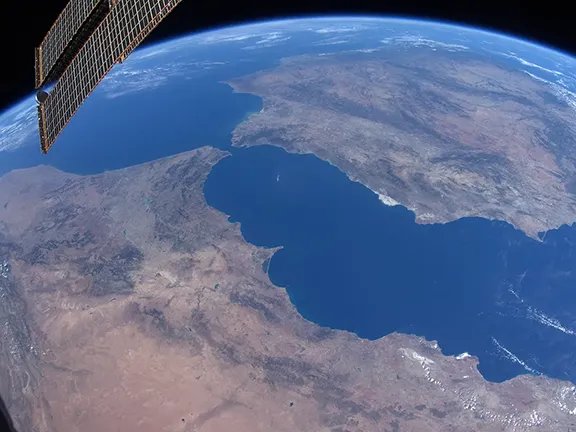
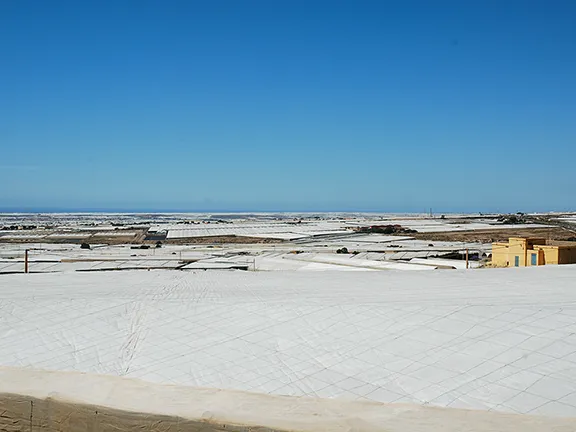
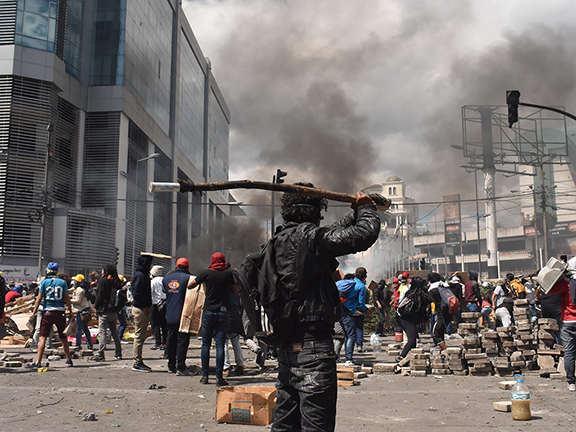
During this time, the government implemented a series of economic policies aimed at modernizing the economy, including investment in infrastructure, the expansion of industrial production, and the promotion of agricultural modernization. These policies were aimed at boosting economic growth and reducing the country's dependence on foreign imports. However, outward appearances gave the lie to what was actually happening in Almeria.
Contents
Authoritarian Rule
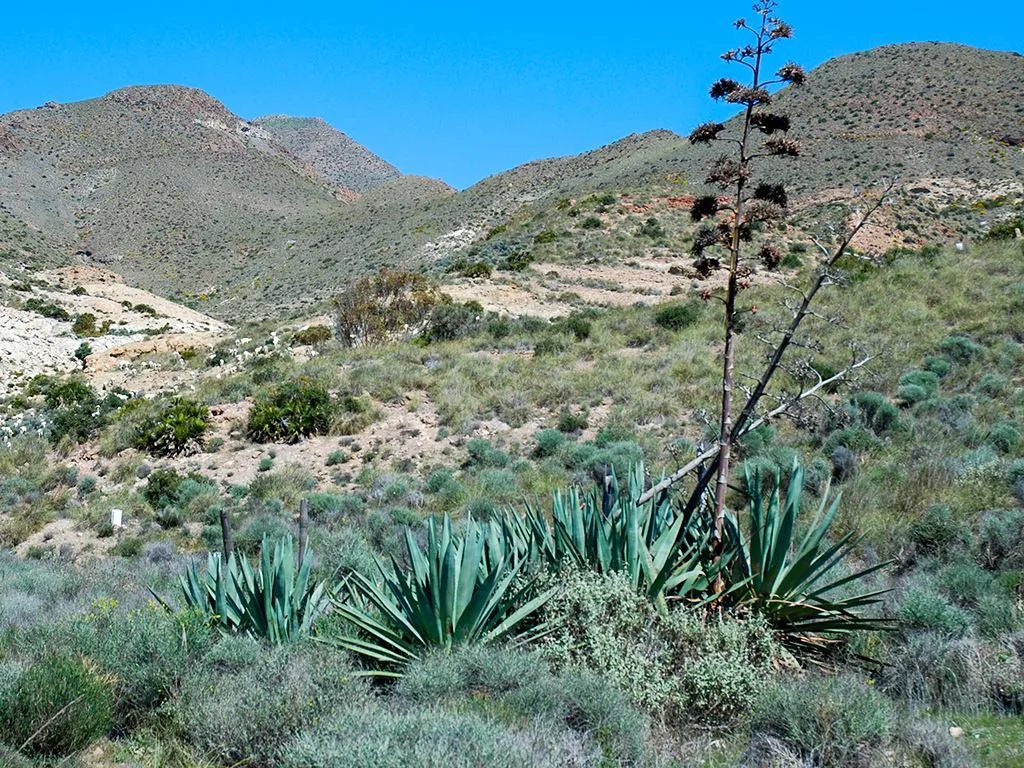
In 1941, Spain was still recovering from the economic and social devastation brought on by the Spanish Civil War, which had ended only two years earlier. The country was under the authoritarian rule of General Francisco Franco, and his government had implemented policies that emphasized self-sufficiency and state control of the economy. The economic situation was challenging, with high levels of poverty and unemployment, particularly in rural areas.
Francoism
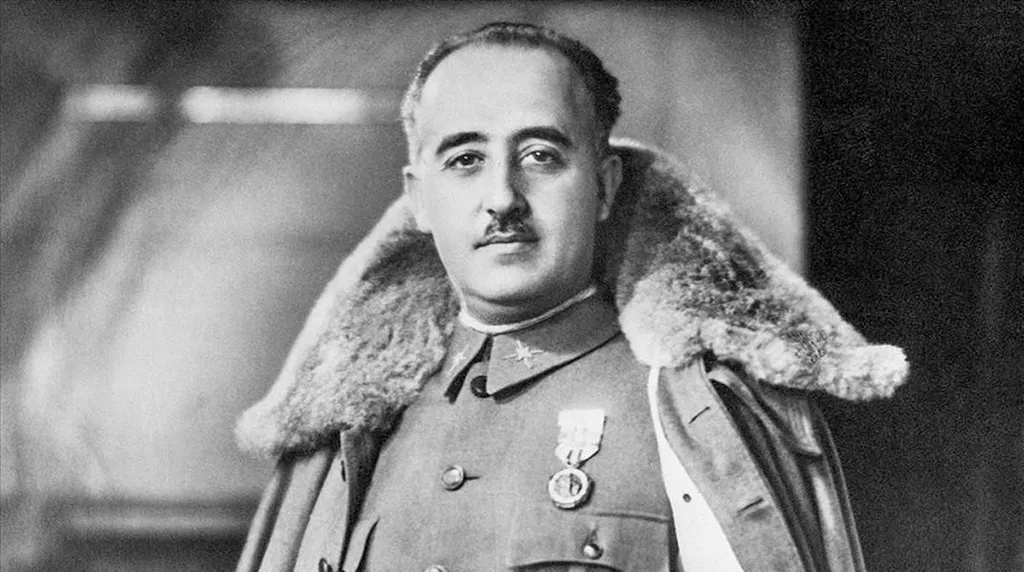
As Spain's economy grew and became more industrialized and urban, "Francoism created an affordable, disciplined workforce which was achieved by the killing of union leaders, by the destruction of genuine, representative organizations and by instilling fear and pessimism in the general population.The state guaranteed employers a 'business friendly' environment with a docile and cheap workforce", according to a report by Cazorla-Sanchez in 2010. We shall return to this point shortly.
Subsistence Farming
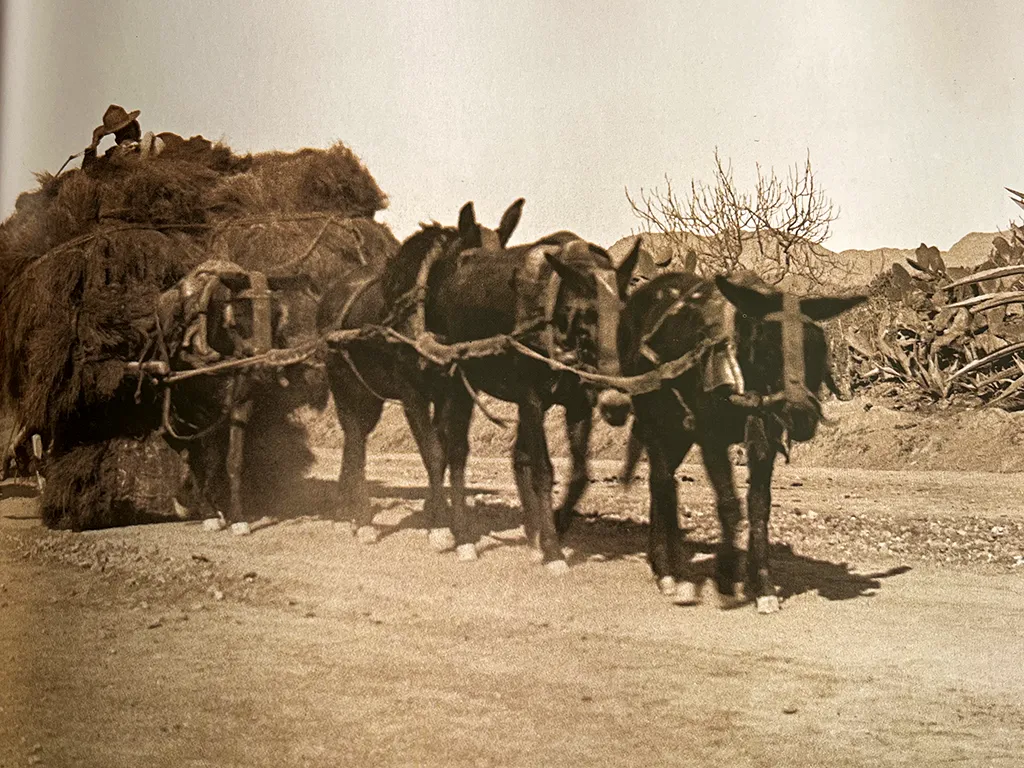
In the coastal regions of Granada and Almeria, agriculture was primarily subsistence dry farming. In the Campo de Dalias area this consisted of barley and prickly pear, some grape vines along with subsistence livestock, goats and pigs and in the area of Nijar, barley, esparto and prickly pear with goats and pigs.
Traditional cash crops were esparto grass, used for artisanal products and paper, sugar cane, and glasswort, used in the manufacture of soap and glass. Hardly a world-shattering economy.
Lack of Infrastructure
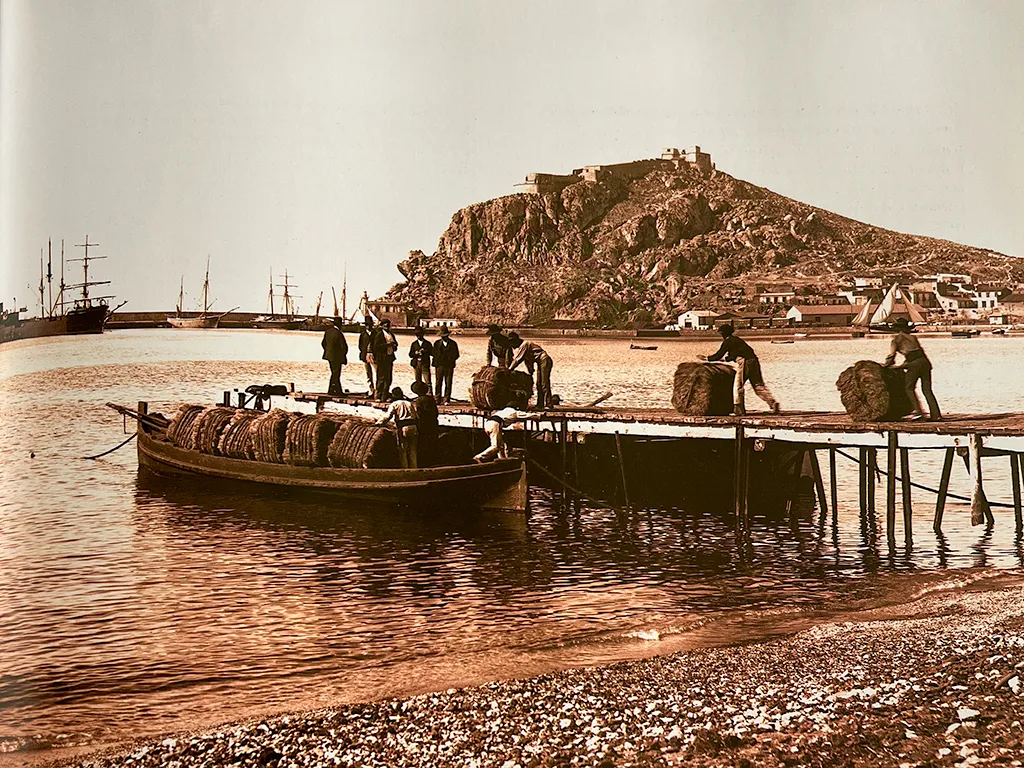
The few roads, including the coastal N340, known during Roman times as the Via Augusta, were unmade, the scattered ports were basic, little more than breakwaters to shelter a bay for the fishing boats and the remaining railway network courtesy of the by now defunct mining companies only ran from inland to Almeria city. Traveling through the countryside and villages between the Mediterranean Sea and the foothills of the mountains that rear up only a few kilometres inland would have been like traveling back in time two, three, four even five hundred years. All that was about to change.
The coastal plains of Almeria and to a lesser extent Granada, were known to be fertile; the problem was lack of water and a very thin population, mostly centred in Almeria city, widely dispersed small inland villages and the fishing villages along the coast.
In 1941, an area of land southwest of Almeria city, known as the Campo de Dalias, was decreed an Area of Natural Interest.
Aquifers in the Campo de Dalias
Franco 'reinvented' the aquifer and proudly announced that he was able to provide the impoverished rural population of the Campo de Dalias with an unlimited supply of water to allow them to grow their own food and even, if they worked hard, a surplus that they could sell. As a piece of propaganda it actually worked and people started to move to the Campo de Dalias from all over southern and central Spain.
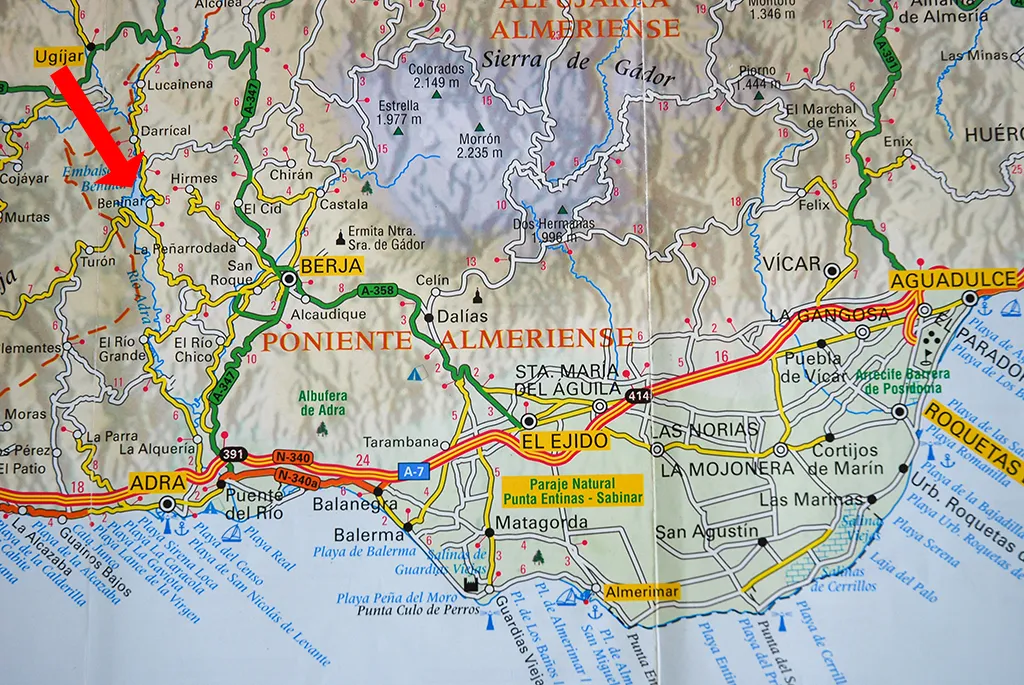
The Campo de Dalias aquifer originally had two main natural discharge points. The first is in the interior, the so-called 'fuentes de Marbella', (Marbella spring) beside the Adra River to the south of Beninar reservoir. The other is a submarine groundwater discharge located in the Aguadulce area, where the carbonate aquifer intersects with the coastline. The intensive exploitation, which began in the 1970s, practically eliminated the freshwater discharges and even generated the inland movement in freshwater-saltwater contact. Consequently, the submarine groundwater discharge in Aguadulce is currently a seawater entry point, constituting one of the greatest risks to water quality in the system. Aguadulce, once renowned for the quality of its water, now barely lives up to its name.
On the other hand, the Marbella spring has maintained its water flow, which has even increased considerably as a result of a severe leakage in the Beninar reservoir located upstream from this spring, as a consequence of its permeable base. However, that is a little in the future since the Beninar reservoir was not built until 1983.
The First Colonisers
In 1943, the National Institute of Colonisation opened the first well, drawing water from the Campo de Dalias aquifer and began encouraging people to settle in the coastal plain by offering them land. This policy, of moving people from one area of the country to another, has been normal practice in Spain since the reconquest. Those first colonisers received the deeds to their property in 1954.
The first wells could only draw water from a maximum depth of 40 metres. It was only with the introduction of high capacity water pumps in 1957 that water could be drawn from bore holes up to 100 metres deep.
A Hostile Environment
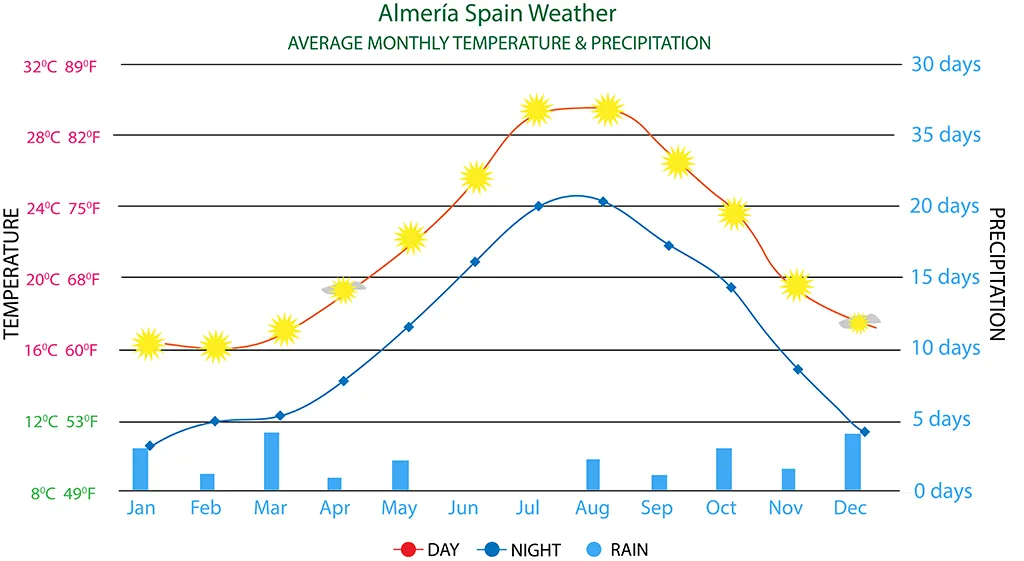
The challenge now was to produce crops in what is still a hostile environment.
Drying winds could desiccate salad crops overnight. Early smallholders used reed matting for windbreaks.
Then there is the problem of high summer temperatures. Anybody here who grows in areas similar to the pre-plastic covered Campo de Dalias, such as central Almeria, knows that when air temperatures exceed about 30 degrees, even warm season plants stop growing because their roots become too hot to extract water and minerals from the soil. Leaves droop in an attempt to conserve water and any fruit on the plant becomes dormant, then shrivels as precious water is returned to the plant and the fruit eventually withers and dies.
And last but by no means least, in the arid landscape, soil and minerals have to be constantly replenished because there are no permanent streams bringing fresh soil from the uplands.
Cool Feet Cool Roots

In 1954, a smallholder, Juan Sanchez Romera, tried an experiment. He used beach sand to mulch his crops. Over the years this practise was refined as growers tried different thicknesses of manure, compost and sand for different crops. For those wanting to try this at home, the formulae they arrived at was; 20 cms of loam or clay soil on top of the subsoil, manure and compost to a depth of 2 cms, followed by 5cms of washed beach sand.
Almost as a bonus, the growers discovered that the sand mulching kept the growing medium at even temperatures radiating or absorbing heat from the light as required. Try walking on a sandy beach in bare feet in the middle of summer to feel for yourself just how much heat can be absorbed by the top centimetre or two of sand and how cool the sand beneath is in comparison. The roots loved it.
As did the tomatoes
The First Greenhouses
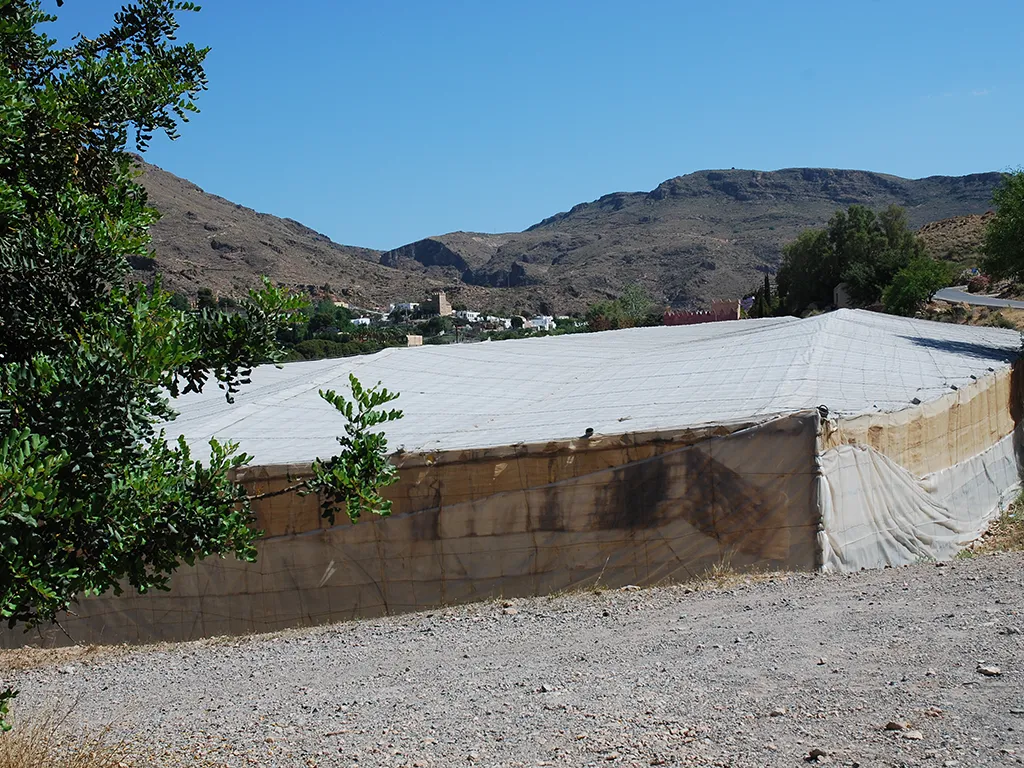
The next major step forward was in 1963 when the first greenhouse was erected in Almeria by Francisco Fuentes Sanchez. His idea was to extend the growing season and produce early crops as they had been doing for some years in the Canary Islands. This first attempt to locally control the climate worked and his idea was taken up by other growers until, by 1970, the practice was widespread. These early greenhouses used a single sheet of plastic during the winter and early spring. The plastic would then be removed to leave a bare framework of wood or metal poles. The plastic deteriorated within a couple of years. Severe winter winds would leave these early greenhouses with tattered flags of rotting plastic fluttering in the breeze, untidy to say the least. By 1970 there were 45 hectares of plastic. Today, 53 years later, over 46,000 hectares are covered in plastic.
The First Cooperative Bank
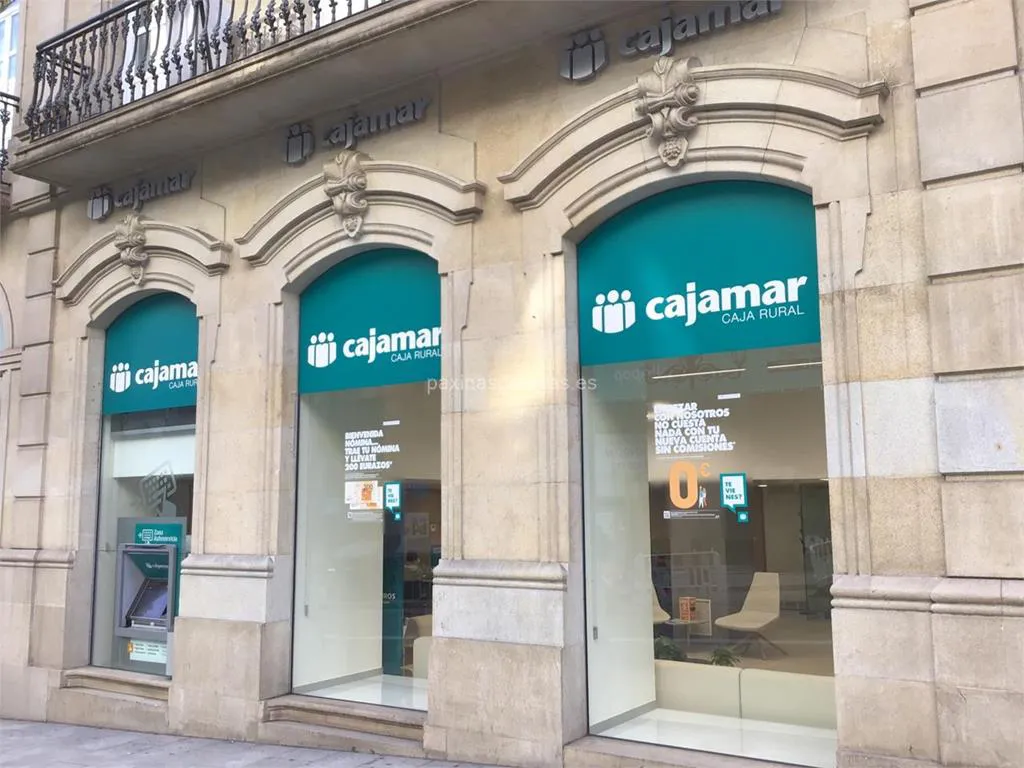
It was no coincidence that, in the same year1963, Caja Rural Provincial de Almeria (the cooperative bank, now Cajamar) commenced activities on the initiative of a few local people and was the impetus for farmers to organize. Under the Franco regime however, union leaders and political organizers were prohibited and a there was a deep distrust of institutions and authority. The concept of people controlling their own lives was frowned upon by Franco, remember the Cazorla-Sánchez report in 2010.
Under the Radar
Local Almeria firms were denied permits to market their products by the government and commercialisation was thus controlled by larger companies from other parts of Spain (all having a better relation with the Regime). Product from Almeria was purchased by other areas in Spain, for example companies in Valencia and Murcia would buy Almeria product and then market it as their own. What little financial intermediation existed was largely through private auction houses. The embryonic cooperatives had to develop 'under the radar' of the Regime.
The question is, "Why did Franco have such a down on Almeria for so long?" The answer may be that during the Spanish Civil War, Almeria city and by extension the province, remained Republican throughout. Even after the war, a large proportion of the population in Almeria had Republican leanings and they were persecuted as a result. Franco was a man who bore a grudge.
References
Cajamar (2016). 'Contribuciones economicas, sociales y medioambientales de la agricultura intensiva de Almeria.'
Cynthia Giagnocavo. The Almeria Agricultural Cooperative Model: creating successful economic and social communities (2012)
Pulido-Bosch, Antonio, Angela Vallejos, Fernando Sola, and Luis Molina. 2020. "Groundwater Sustainability Strategies in the Sierra de Gador-Campo de Dalias System, Southeast Spain" Water 12, no. 11: 3262.
Biosol Portocarrero
Barcelona Field Studies Centre
Cynthia Giagnocavo. The Almeria Agricultural Cooperative Model: creating successful economic and social communities (2012)
Pulido-Bosch, Antonio, Angela Vallejos, Fernando Sola, and Luis Molina. 2020. "Groundwater Sustainability Strategies in the Sierra de Gador-Campo de Dalias System, Southeast Spain" Water 12, no. 11: 3262.
Biosol Portocarrero
Barcelona Field Studies Centre